Factory types
Difference Between a Cosmetic Factory and a Lab: Buyer Guide
The difference between a cosmetic factory and a lab decides who can develop your formula, who can fill it at volume, and which documents you should be asking for.
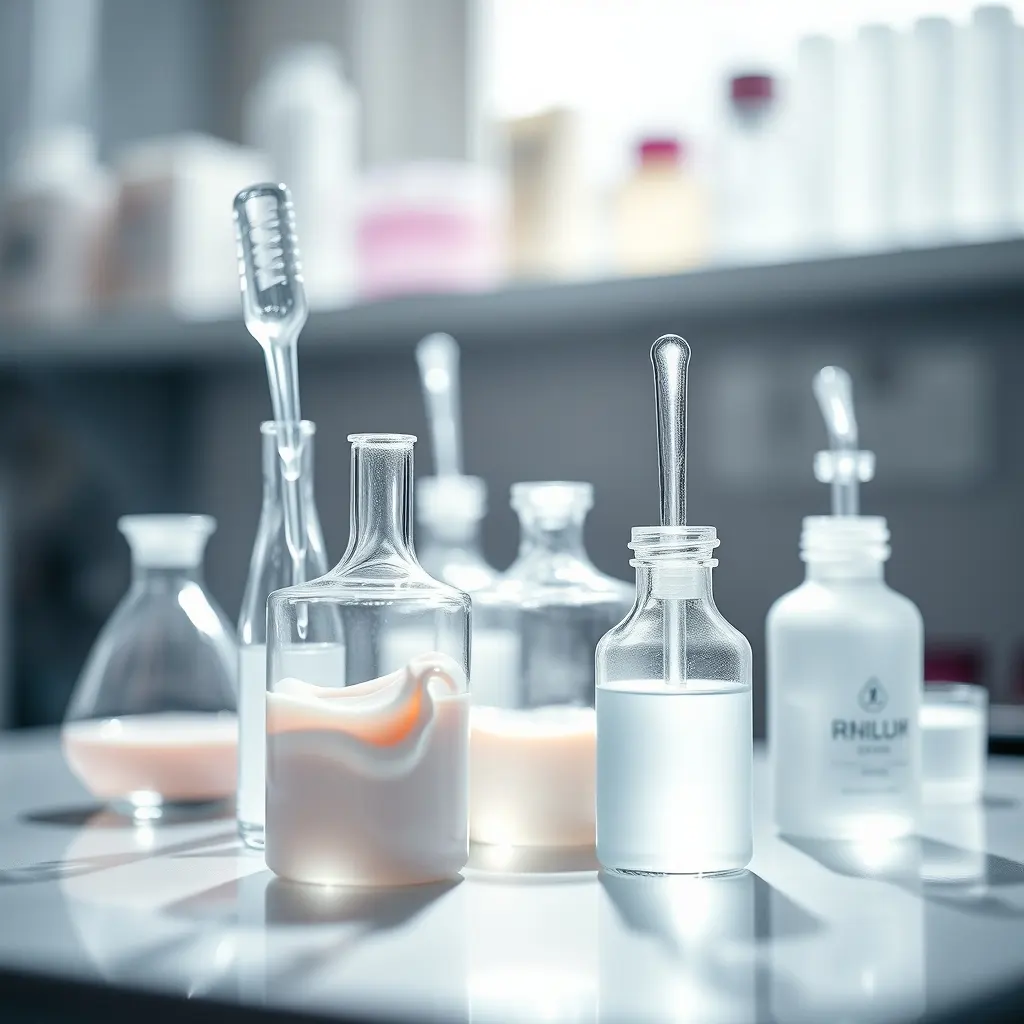
The difference between a cosmetic factory and a lab sounds like terminology, and buyers treat it that way until a project stalls. Then it becomes very concrete: the partner who developed a beautiful sample cannot produce at volume, or the partner who can produce at volume cannot reformulate when the sample fails stability. Development and production are two different capabilities. Sometimes they sit in one company, often they do not. This guide explains what each one actually does, which combinations exist, and how to verify which type of organisation you are dealing with before you commit.
Two different functions: development and production
Strip away the job titles and marketing language, and a cosmetic project needs two distinct capabilities.
**Development** answers the question: what exactly is this product, and does it work and survive? That means formulating, bench trials, sample iterations, pH and viscosity targets, preservative selection, compatibility with packaging, stability and microbiological testing, and the technical documentation that supports a specification. The work happens at gram and kilogram scale on laboratory equipment, with an analytical balance, a homogeniser, a pH meter, a viscometer, incubators and often a microbiology capability.
**Production** answers a different question: can this exact product be made repeatedly, at volume, to the same specification? That means process scale-up, large jacketed vessels with controlled heating and cooling, defined mixing shear, filtered water systems, filling and sealing lines, batch documentation, in-process quality control, warehousing of raw materials and finished goods, and release procedures.
The distinction matters because the two functions fail in different ways. A development failure looks like a sample that separates after four weeks at elevated temperature, or an active that oxidises in the chosen bottle. A production failure looks like batch three having a different viscosity from batch one, or a fill weight that drifts, or a batch released without retained samples so there is nothing to compare against when a complaint arrives.
Both functions must exist somewhere in your supply chain. The practical question for a buyer is not which is better, it is which organisation holds which function, and whether the handover between them is managed by them or by you. When the handover is managed by you, you are effectively acting as the technical project manager, which is workable only if you have the capability to do it.
This also shapes how you read a quotation. Quotes for **product development** and quotes for unit production are different documents with different cost structures, and a single price per bottle that silently bundles both tells you very little about either.
What a cosmetic lab does, and what it cannot do
A cosmetic laboratory is a development organisation. Some are independent contract R&D houses, some are the R&D department inside a manufacturer, and some are small formulation studios run by one or two chemists.
What a capable lab delivers:
- A formula developed against your brief, with raw materials specified by grade and supplier, not just by name.
- Multiple sample iterations with technical data, not only a jar and an opinion.
- Defined specification ranges: pH, viscosity, appearance, odour, density, and acceptance limits for each.
- Preservative selection and preservative efficacy or challenge testing.
- Stability testing across temperature conditions and freeze-thaw cycles, with results recorded over time.
- Packaging compatibility assessment with the actual chosen container.
- A manufacturing procedure describing order of addition, temperatures, mixing requirements and cooling.
- Input into claim substantiation and regulatory documentation.
What a lab generally cannot do:
- Produce commercial quantities. Laboratory batches are measured in grams to a few kilograms.
- Guarantee that a bench formula behaves identically at production scale. Shear, heat transfer and mixing time all change, which is why a pilot batch exists.
- Fill, seal, label and pack at line speed with consistent fill weights.
- Hold the batch records, in-process controls and release procedures that production requires.
The most common buyer mistake here is approving a bench sample as final. A bench sample is a proof of concept. The version that matters is the pilot batch produced on production equipment, because that is the one you will actually receive. Ask explicitly whether the sample you are holding is a laboratory batch or a pilot batch, and whether the formula has been scaled up yet.
The second most common mistake is assuming the lab owns nothing. Where a formula came from a laboratory's existing portfolio, it may be used by several brands; where it was developed specifically for you, the ownership and confidentiality terms are negotiable and should be written down rather than assumed.
What a factory does, and the four types you will meet
A cosmetic factory is a production organisation. The equipment, the systems and the documentation are built around repeatability rather than invention. But the label factory covers at least four quite different business models, and the differences affect what you get.
- **Full-service OEM or ODM manufacturer.** Has both an in-house laboratory and production lines. Can take a brief, develop, test, scale up, produce, and supply documentation as one organisation. Simplest for a brand owner because the development-to-production handover is internal. Usually the most structured on documentation.
- **Contract filler or packer.** Production capability without meaningful development capability. You or your lab bring a finished, validated formula, and the filler manufactures and packs it. Efficient and often competitive, but they will not solve a formulation problem for you.
- **Specialist manufacturer.** Built around one category: emulsions, sunscreens, anhydrous and balm products, aerosols, powders, supplements, or fragrance. Deep competence inside that category and limited competence outside it. A **perfume manufacturer** and a sunscreen manufacturer are not interchangeable even though both make cosmetics.
- **Trading company or sourcing agent.** No production of its own. Places your order with factories it works with. This can be genuinely useful, particularly when a project spans several categories, but the role must be disclosed. A trading company presenting itself as a factory is a red flag not because intermediaries are bad, but because the misrepresentation tells you something about how else you will be informed.
What to expect from any factory, regardless of type: a defined quality management approach, production in a facility operating to recognised cosmetic GMP principles, controlled water systems, documented batch records with batch numbers, in-process checks, retained samples from each batch, and a finished goods release step. Certifications should be named specifically, verified against the certificate itself including scope and validity, and never accepted as a general claim that everything is certified.
One commercial figure to plan around: for OEM and ODM production the standard minimum order is 1,000 units per SKU. Pricing depends on the product and the quantity and is confirmed at quotation.
The three combinations you will actually encounter
In practice, buyers meet three structures. Each works, and each puts the coordination burden in a different place.
**One, integrated manufacturer.** Lab and production in the same company. You brief once, and the formula moves internally from bench to pilot to production. Accountability is single-threaded, which is the biggest advantage: when a batch deviates, there is no argument about whether the formula or the process caused it. The trade-off is that you are limited to that company's formulation strengths, which is why category fit matters so much in selection.
**Two, independent lab plus contract filler.** You own the formula and the specification, and you place production with a filler. More control, more flexibility to move production later, and often better economics at scale. The burden is that you, or someone you pay, must manage the technical transfer: supplying the manufacturing procedure, agreeing in-process controls, approving the pilot batch, and arbitrating when the filler says the formula is difficult to run and the lab says the process is at fault.
**Three, managed partner model.** A company that owns the brief, the project management and the quality requirements, and executes production through partner factories it manages. This sits between the first two: you get one point of contact and one accountable party, without that party necessarily owning the plant. 5FINE operates this way, managing production through GMP-standard partner factories across several countries rather than operating its own plant, with formula development, branding, packaging and export handled as one project. The buyer's verification task is the same as always: establish clearly which entity performs which step, and get it in writing.
How to choose between them. If this is your first product and you do not have technical staff, an integrated manufacturer or a managed partner model will cost you less in avoidable mistakes. If you already own validated formulas and have in-house technical capability, a lab plus filler structure gives you flexibility and leverage. If your project spans very different categories, for example skincare plus a **herbal product OEM** line plus fragrance, expect more than one production site regardless of who presents the quotation, and ask who is accountable for each.
Verification: how to tell which one you are talking to
Marketing material will not tell you reliably, because almost every company in this industry uses the words factory, laboratory and manufacturer loosely. Verification is a short, specific set of questions and documents.
**Ask these questions, and listen for specificity rather than enthusiasm:**
- Do you develop formulas in-house, or do you work from formulas supplied to you?
- Is the production site owned and operated by your company? What is the address?
- Which categories do you produce on site, and which do you place elsewhere?
- Which licences and certifications apply to that site, and what is their stated scope and validity?
- What is your maximum and minimum batch size for my product type?
- Who signs off a batch for release, and what is checked before release?
- Will the sample I receive be a laboratory batch or a pilot batch from production equipment?
**Ask for these documents:**
- Company registration, so you know the legal entity you are contracting with.
- Certificates with scope and expiry visible, rather than logos in a brochure.
- A redacted example of a batch record and a certificate of analysis.
- A product specification sheet for an existing product, as evidence that specifications exist at all.
- The manufacturing procedure summary for your product, once development is underway.
**Signals worth slowing down for:**
- Every question answered yes, with no clarifying questions asked about your product.
- Reluctance to provide a site address, or an address that is an office in a commercial building rather than a plant.
- Samples supplied with no technical data.
- No mention of stability or microbiological testing in the development plan.
- Promises of exclusivity before any contract exists.
- A quotation with one bundled number and no breakdown between development, components and unit production.
A site visit resolves most ambiguity quickly, and the useful parts are rarely the production hall itself: look at whether raw materials are labelled and segregated, whether batch records are being completed in real time, whether retained samples are stored and indexed, and whether the quality function can refuse a release. When you **request quotes from Thai factories**, send the same written brief and the same question list to each one. The variation in how they answer tells you more than the variation in price.
Which one to approach first, by project type
The right starting point depends on what you already have. Four common situations cover most buyers.
**You have an idea but no formula.** Approach an integrated manufacturer or a managed partner. You need development and production, and you do not want to coordinate a technical transfer on your first project. Expect to be asked for a brief covering target user, primary concern, texture, price tier, markets and exclusions; the better the brief, the fewer sample rounds.
**You have a formula you own and it is validated.** Approach contract fillers and specialist manufacturers in your category. Your leverage is real because the development risk is already retired. Bring the full package: formula, specification, manufacturing procedure, stability data and packaging details. Fillers quote faster and better when the technical package is complete.
**You have a product on the market and want to move or add production.** Approach manufacturers in the same category, and plan for a validation batch rather than treating a transfer as routine. Equipment differences change outcomes, so compare the new pilot batch against a retained sample from your current supplier before switching. Agree in advance what deviation is acceptable.
**You have a formula idea that is technically ambitious.** Start with a laboratory, independent or in-house, and treat development as its own project with its own budget and its own stage gates. Decide production later, once you know what the formula requires in terms of equipment, since some formats need specific capability that not every plant has.
A final piece of sequencing that saves money in every case: settle the formula and its specification before committing to packaging components and before printing artwork. The formula determines which containers protect it and which materials are compatible, and the specification determines what your label can say. Buyers who choose packaging first routinely pay twice.
If you are evaluating a **skincare manufacturer in Thailand** or anywhere else, keep the same discipline throughout: establish which function each party performs, get the specification and the responsibilities in writing, and verify certificates against the documents rather than the brochure. The structure you select matters less than knowing precisely what you selected.
Need expert support?
Leave your details and our team will get back to you.
FAQ
Frequently asked questions
Can a cosmetic lab manufacture my product for sale?
Generally no, not at commercial volume. Laboratories work at gram to kilogram scale and are equipped for development and testing rather than filling, sealing and packing to a specification repeatedly. Some labs run small pilot or limited production capability, which can suit a very small launch, but you should confirm the maximum batch size, the filling arrangement and whether batch records and release procedures are in place.
Is a bench sample enough to approve before production?
No. A bench sample proves the concept; it does not prove the formula behaves the same at production scale, where mixing shear, heating and cooling rates differ. Approve a pilot batch made on production equipment, and compare it against the bench sample for viscosity, appearance and sensory profile. Keep a retained reference sample of the approved version so later batches can be checked against something concrete.
How do I know if a supplier is a factory or a trading company?
Ask directly whether the production site is owned and operated by their company, and ask for the site address and the licences and certificates with scope and validity visible. Check the company registration to see what the legal entity is. A trading company that discloses its role can still be a useful partner; the problem is one that presents itself as a manufacturer, because that misrepresentation predicts how else information will be handled.
Who owns the formula when a lab develops it for me?
It depends entirely on the written agreement, which is why assuming is the costly option. A formula from an existing portfolio usually remains the developer's and may be used by other brands. A formula developed specifically for you may be owned by you, shared, or retained by the developer depending on what is agreed. Settle ownership, confidentiality and the right to move production to another site before development work begins.
Prepared by the Thai Cosmetic Factory team for informational purposes. Some links may lead to referred partners.
Articles
Related articles
Cosmetic Factory Site Visit: What to Bring (and What to Check While You're There)
Booking a flight to inspect a factory in Thailand is the easy part. What trips up most buyers is showing up unprepared — no checklist, no samples to compare, no idea which document

How to Read a Cosmetic Factory Quotation: A Buyer's Checklist
Learning how to read a cosmetic factory quotation means checking what the unit price excludes, not just comparing the number at the bottom.

Questions to Ask Before Signing a Manufacturing Contract
The questions to ask before signing a manufacturing contract are not the ones most buyers actually ask. Price, minimum quantity and lead time get all the attention, while the claus