Factory types
Skincare Factory vs Cosmetic Lab in Thailand: Which Do You Need?
Buyers often discover the difference between a skincare factory and a cosmetic lab in Thailand only after signing with the wrong one for their stage
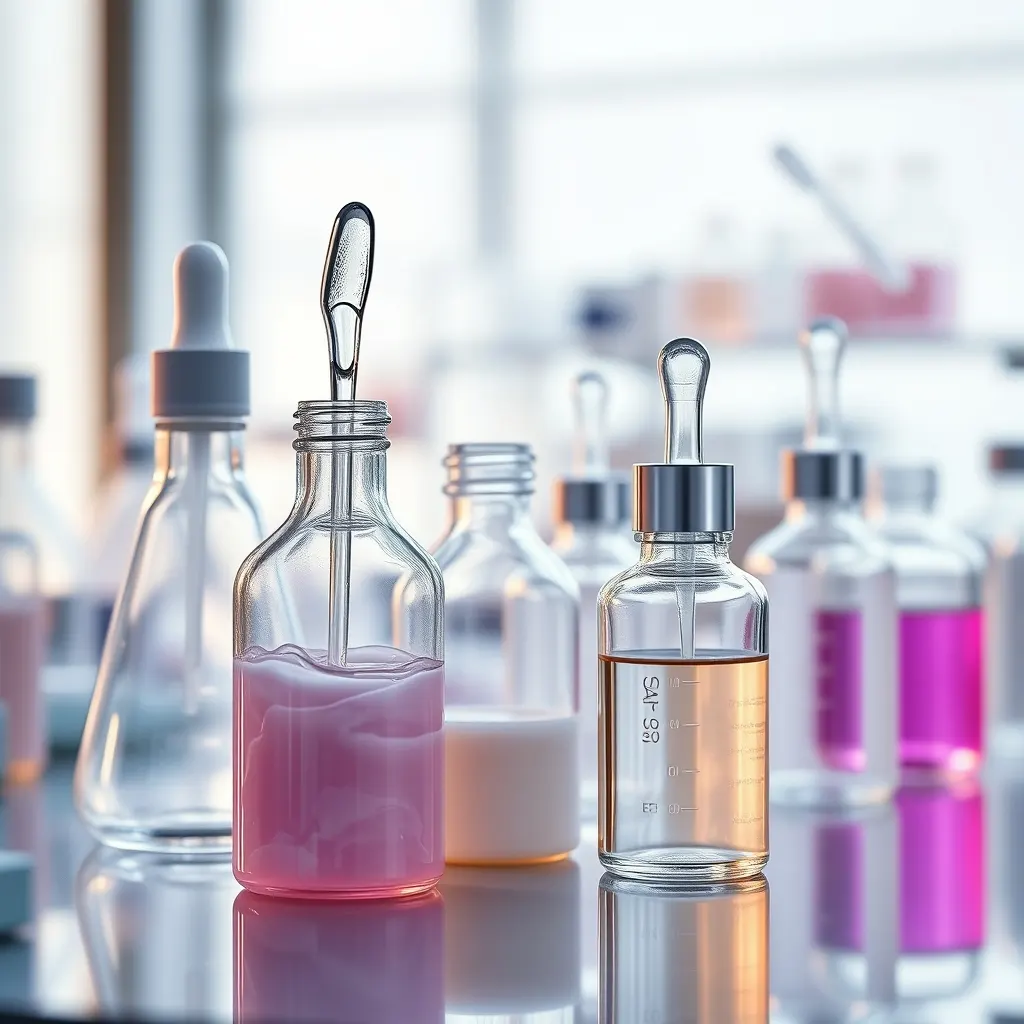
Buyers often discover the difference between a skincare factory and a cosmetic lab in Thailand only after they have signed with the wrong one for the stage they are at. Both will take your project. Only one of them is set up to do what you need next. This guide separates the two by function, says which you should approach at each stage, and sets out what to verify in each case, because an audit of a lab looks nothing like an audit of a filling plant.
The real difference between a skincare factory and a cosmetic lab in Thailand
The distinction is one of function, not of size or prestige. Both can be legitimate, licensed businesses; they solve different problems.
A **cosmetic laboratory** is a development environment. Its output is knowledge in documented form: a formula, a specification, a safety assessment, test data. Work happens at bench scale in kilos, by chemists, on equipment designed to be flexible rather than fast. Its economics rest on billable development time.
A **skincare factory** is a production environment. Its output is finished, packed, batch-identified units. Work happens in mixing vessels measured in hundreds of kilos, on filling lines dedicated to particular formats, by operators following a batch record. Its economics rest on line utilisation, which is why minimum quantities exist at all.
The practical consequences a buyer feels:
- A lab will cheerfully develop something a factory cannot produce at scale - a texture that depends on a mixing action the plant's equipment does not reproduce, or an ingredient that behaves differently in a 500 kg vessel.
- A factory asked to develop will usually offer you an adaptation of a formula it already runs, because that is what its lines are proven on. For most brands this is a feature rather than a limitation.
- A lab generally cannot fill your order; a factory generally will not spend weeks on novel development for a first-time client with one SKU.
Asking which is better is the wrong question. The useful question is which one you need this month.
Which one you should approach at each stage
Map your need to the stage you are actually at, rather than to where you hope to be.
- **You have an idea, no formula, and want something genuinely different.** Start with a laboratory, or with a factory that has a real in-house R&D team. Budget for development as a separate cost from production, and expect to pay for bench samples before anything is scaled.
- **You want a well-made product in a known category, quickly.** Go to a factory and work from its existing formula library, adjusting fragrance, colour, a hero ingredient and packaging. This is the route most first brands take, and the one with the fewest technical surprises.
- **You already own a formula, from a previous supplier or your own chemist.** You need a factory, plus a scale-up conversation. Expect the factory to ask for the full formula, process notes, specifications and stability data, and expect it to require trial batches before committing.
- **You need testing or documentation only.** A laboratory or an independent testing house, not a factory. Some buyers deliberately use a third-party lab for stability and microbiological testing so the results are not produced by the party being paid to make the product.
- **You are evaluating an existing supplier's quality.** An independent lab plus an inspection body, for analysis and for **supplier verification** respectively.
One mistake worth naming: approaching a factory with a half-finished concept and letting its sales team define the product. You will get something sellable, but it will be whatever is easiest for that plant, and you will not know which constraints were technical and which were commercial.
The hybrid model, and why most Thai buyers meet it first
In practice the two functions are often sold as one package. Thailand has a large contract manufacturing sector, and a meaningful share of its companies describe themselves as full-service - development, production, filling, packing and export documentation under one contract.
These hybrids come in several shapes, and they are worth telling apart:
- **Factory with genuine in-house R&D.** Chemists on site, a pilot-scale area, a formula library it owns. The strongest option for most brands because development and scale-up happen in the same building, so the texture you approve is the texture that can be produced.
- **Factory with a formulation desk.** Technically capable of adjusting existing bases - fragrance, colour, active level - but not of developing from scratch. Perfectly good for a first product. Problematic if you were told otherwise.
- **Lab that subcontracts production.** Development is theirs, filling belongs to someone else. Fine when disclosed, risky when not, because the party you audited is not the party making your goods.
- **Coordinator with neither.** Manages a **partner factory network** and is open about it. This can work well - it is essentially a managed **global sourcing** service - but you should know it, because your leverage, your pricing and your escalation path all sit one step removed from production.
The question that separates them is blunt and effective: which stages of my project happen inside a building you control, and which are subcontracted? Ask it in writing. An honest answer is not a disqualification; a vague one is.
Verifying a lab and verifying a factory are different jobs
Buyers frequently apply a factory checklist to a lab and conclude the lab is substandard, or apply a lab's logic to a factory and miss what matters in production. The criteria are genuinely different.
**For a laboratory, verify:**
- Qualifications and tenure of the formulating chemists, and whether the person you meet is the person who will do the work.
- Whether testing is performed in-house or subcontracted, and to whom.
- Accreditation scope of any testing it performs, and whether that scope actually covers your tests.
- How formulas, raw material data and your confidential information are stored and controlled.
- Documentation standards: will you receive a full formula with percentages, process notes and specifications, or a summary you cannot transfer?
- Whether they routinely support scale-up, and whether they will attend a trial batch at the factory.
**For a factory, verify:**
- Manufacturing licence and GMP certification held in the factory's own registered name, with the address matching what you visit.
- Which formats run on dedicated lines versus shared equipment, and the cleaning and changeover procedure between products.
- Batch records, retained samples, traceability from raw material lot to finished batch.
- Incoming raw material control and the supplier approval process.
- In-process and finished goods testing, reject criteria, and what happens to a failed batch.
- Water system, environmental monitoring and personnel hygiene controls appropriate to the category.
- Capacity and whether your order will be run on the line you were shown.
Treat certificates as a starting point, not a conclusion. Verify the certifying body and the certificate's scope and validity directly, and confirm company registration details against Thailand's business registry rather than against a brochure.
Formula ownership and the handover between lab and factory
If development and production sit with different parties, the handover is where projects stall. Settle it in writing before development starts, not after you have a texture you love.
The points that matter:
- **Who owns the formula.** A lab that develops for you may retain rights, grant you full ownership, or license it. All three exist. Ownership determines whether you can move production later.
- **What exactly you receive.** A full quantitative formula with raw material grades and named suppliers is transferable. A trade-name summary is not, and discovering that when you want to change factories is expensive.
- **Process documentation.** Order of addition, temperatures, mixing speeds and times, cooling profile. A formula without a process is not reproducible.
- **Raw material specifications.** Grade, supplier and acceptable alternates. Substituting an emulsifier from a different supplier can change a texture noticeably.
- **Scale-up responsibility.** Who pays for trial batches when the bench formula behaves differently in production volumes - and it often does. Mixing shear, heating and cooling rates all change with vessel size.
- **Stability on the production batch.** Bench-scale stability data does not transfer automatically; plan for testing on the first factory batch in the final packaging.
A sensible sequence: development and bench approval, formula and process handover, factory review and feasibility comment, pilot or trial batch, stability and compatibility testing in the final pack, then first production. Brands that compress this sequence to save weeks usually spend those weeks later, with inventory already made.
Red flags and the questions to ask each party
Signals that should slow you down, whichever you are talking to:
- A company that claims both world-class R&D and large-scale production but will not let you see either on a live video call during working hours.
- Certificates supplied as images only, in a name that differs from the contracting entity, or with no issuing body you can contact.
- A refusal to state what is subcontracted.
- Development quoted as free when bundled with production. Development has a real cost; if it is not on the invoice it is in the unit price, in the formula ownership terms, or in the quality of the work.
- Reluctance to discuss what happens to a batch that fails quality control.
- A quotation given as a single unit price with no breakdown.
Questions for a **skincare manufacturer in Thailand**: which formats run on your own dedicated lines; may I see a redacted batch record and a stability protocol for a comparable product; what is your changeover procedure; what are your reject criteria; what documentation will you provide for my export market and what remains my responsibility; will my order run on the line I was shown?
Questions for a laboratory: who formulates, and will they stay on my project; what is tested in-house and what is subcontracted; what documentation do I receive and do I own the formula; do you support scale-up at a third-party factory?
One commercial note to plan around: for private label and OEM production the standard minimum is 1,000 units per SKU, with each variant counted separately. Development work is quoted apart from that. If you are weighing a second category later - a supplement or ingestible line alongside your skincare, for instance - ask whether the same group handles **supplement manufacturing**, since that is a different licence and often a different plant entirely.
Finally, regulatory requirements and certification schemes change. Treat the detail here as reference only and confirm the current position with the relevant Thai authority, the certifying body, or a regulatory consultant before you commit.
Need expert support?
Leave your details and our team will get back to you.
FAQ
Frequently asked questions
Can a cosmetic lab produce my first production run?
Usually not at commercial volume. A laboratory works at bench scale in kilos on flexible equipment, and it is neither licensed nor set up for batch-identified production and filling. Some labs run pilot batches large enough for a small launch or for sampling, which can be useful for market testing, but it is not a substitute for a filling line. If a lab offers full production, ask whether it holds the manufacturing licence itself or subcontracts to a factory.
Is a full-service manufacturer better than using a separate lab and factory?
For most first-time brands, yes, because development and scale-up happen in the same place and the texture you approve is one the plant can actually reproduce. A separate lab makes sense when you need genuinely novel development, when you want formula ownership that is independent of any factory, or when you want test data produced by a party not being paid to make the product. The deciding factor is how unusual your formula is.
What should I ask to find out whether production is subcontracted?
Ask directly which stages of the project happen inside a building the company controls and which are subcontracted, and request the answer in writing. Then check that the manufacturing licence and GMP certification are held in the name of the entity signing your contract, at the address you visit. A company that manages a partner factory network can serve you well, but you should know it so your audit and escalation route point at the right party.
Do I have to pay for formula development separately?
Development has a real cost whether or not it appears as a line item. Labs typically bill it as a project fee; factories often bundle it into the unit price, into a sample fee, or into formula ownership terms that keep the formula with them. Neither approach is wrong, but ask which one you are being offered, what you receive at the end, and whether the formula is transferable if you later move production.
Prepared by the Thai Cosmetic Factory team for informational purposes. Some links may lead to referred partners.
Articles
Related articles
How Cosmetic Factories Test Product Shelf Life: A Buyer Guide
Understanding how cosmetic factories test product shelf life tells you something more useful than a date on a carton: it tells you how much of that date is evidence and how much is assumption.
Signs a Cosmetic Factory Is Trustworthy: A Buyer's Verification Guide
Choosing a cosmetic manufacturer in Thailand often comes down to a gut feeling after a few calls and a sample box — but gut feeling isn't a verification process. Before you sign a

What Is a Free Trade Zone Factory in Thailand? Buyer Guide
If a Thai manufacturer tells you it operates in a free trade zone, that fact changes your paperwork and sometimes your duty