Vetting & visits
Questions to Ask During a Virtual Factory Tour of a Thai Cosmetic Manufacturer
A virtual factory tour has become the first real checkpoint for many brand owners sourcing from Thailand — often before any sample is shipped or contract signed. But a video call w
A virtual factory tour has become the first real checkpoint for many brand owners sourcing from Thailand — often before any sample is shipped or contract signed. But a video call with a sales manager walking a camera through a hallway tells you very little unless you know what to ask. This guide lays out the questions that actually reveal how a facility operates, so you can tell a well-run plant from one that's simply good on camera. It applies whether you're looking at body care OEM, hair care OEM, home fragrance OEM, or broader beauty and cosmetics manufacturing lines.
1. Start with questions about facility layout and flow
Ask the host to walk the camera from raw material receiving through to finished goods storage, in that order. This single request tells you a lot: a factory with nothing to hide will show you the sequence without hesitation. Ask specifically: 'Where is raw material quarantine, and how is it physically separated from released stock?' and 'Can you show me the line changeover area between batches?' For businesses evaluating Thai OEM/ODM factories across multiple categories, ask whether formulation, filling, and packing happen in the same building or across separate sites — this affects both quality control and lead time communication later.
2. Ask about product segregation if you need multiple categories
If your brand needs more than one type of product, don't assume one tour covers it all. A facility running body care OEM lines may use entirely different equipment, cleanrooms, and staff training from one running hair care OEM or home fragrance OEM. Ask directly: 'Is this the same production area for all three categories, or are lines dedicated by product type?' Fragrance work in particular involves volatile raw materials and different ventilation needs than lotions or creams, so cross-contamination controls are worth a direct question rather than an assumption.
3. Probe quality control, not just certifications
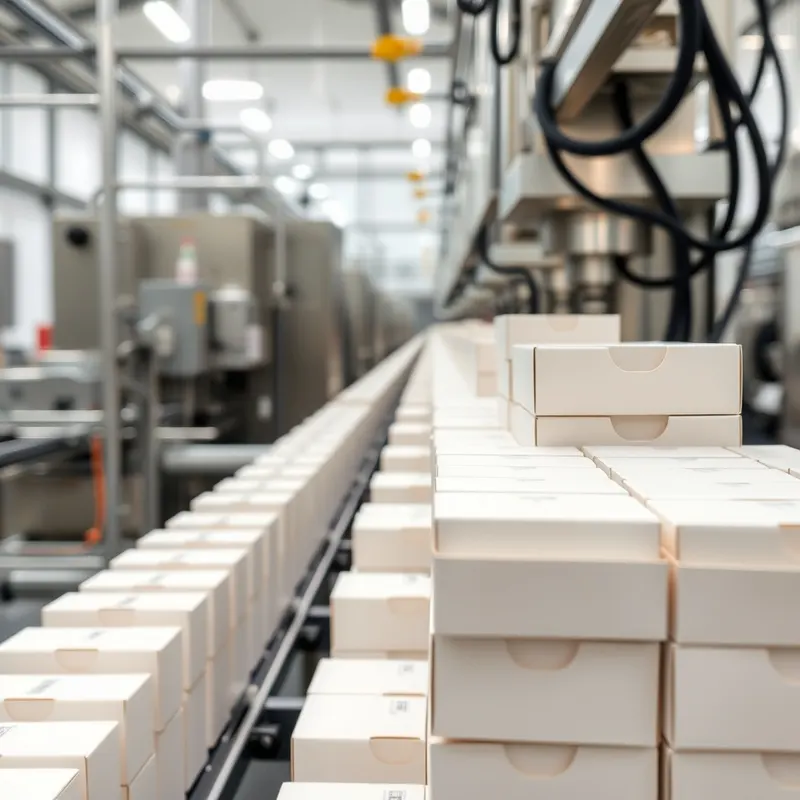
Certifications are useful but a logo on a slide doesn't tell you how QC runs day to day. Ask to see — live, if possible — a batch record for a recently completed order, the in-process testing station, and the retained sample room. Good questions include: 'What in-process checks happen between mixing and filling?' and 'How long are retained samples kept, and can I see the log?' For certifications, it's reasonable to ask which documents exist for the specific product category you're interested in — note that documentation is typically provided per item when you place an order, rather than as a blanket guarantee covering every SKU a factory makes.
4. Ask who you'll actually be working with
A smooth virtual tour is often hosted by a sales or account manager — ask to also see or speak briefly with someone from production or QA. Questions worth asking: 'Who will be my point of contact once production starts?' and 'How are formulation changes or packaging issues communicated during a run?' This matters more for beauty and cosmetics manufacturing partnerships than it might seem, since most friction later comes from unclear ownership of decisions, not from the equipment itself.
5. Clarify MOQ, customization limits and documentation upfront
Ask plainly what minimum order quantities apply to your product type, and don't be surprised if the answer is a round, standard figure rather than something negotiable per SKU — many Thai OEM/ODM factories work on a standard MOQ of 1,000 units per SKU. Pricing, however, genuinely varies by product and volume, so it's fair to ask for a quote rather than expect a number on the call. Also ask what's customizable at that MOQ — formulation tweaks, fragrance variants, packaging components — versus what requires a higher volume commitment.
6. Ask about export experience and shipping documentation
If you're sourcing from outside Thailand, ask what export documentation the factory typically prepares and whether they've shipped to your region before. Useful questions: 'What shipping documents accompany an export order?' and 'Have you exported this product category to my market before?' Keep in mind that import regulations differ by country, so it's worth checking with your own customs broker or regulatory contact on destination-market requirements rather than relying solely on the factory's answer.
Need expert support?
Leave your details and our team will get back to you.
FAQ
Frequently asked questions
Is a virtual factory tour enough to make a sourcing decision?
It's a useful first filter but not usually a final step. A virtual tour helps you narrow down candidates and spot obvious red flags, but most buyers still request samples, documentation, and sometimes a later in-person visit before committing to larger orders.
What's a red flag during a virtual tour?
Vague or evasive answers about batch records, reluctance to show the QC or retained sample area, and an inability to clarify who handles production versus sales are common warning signs. A facility confident in its process usually doesn't mind these questions.
Can I ask about MOQ and pricing during the tour itself?
Yes, it's a good time to ask. Expect MOQ to be stated as a standard figure, commonly 1,000 units per SKU, while actual pricing depends on the specific product and order volume and is usually confirmed through a separate quote.
Should the same questions apply across body care, hair care, and home fragrance OEM?
The core questions about layout, QC, and contacts apply broadly, but it's worth tailoring a few — especially around segregation and ventilation — since fragrance, hair, and body care lines can involve different handling requirements even within the same facility.
Prepared by the Thai Cosmetic Factory team for informational purposes. Some links may lead to referred partners.
Articles
Related articles
Cosmeceutical Manufacturer Thailand: What Buyers Verify Before Signing
Choosing a cosmeceutical manufacturer in Thailand means verifying active-ingredient handling, testing depth and claim support, not just a GMP certificate. This checklist covers what to ask, what to see and what to request.
ISO 9001 vs ISO 22716 for Cosmetic Manufacturers: What Buyers Verify
ISO 9001 vs ISO 22716 for cosmetic manufacturers: what each standard covers, where they overlap, what a factory with one but not the other tells you, how to verify a certificate, and which questions to ask during an audit.

How to Check If a Thai Factory Has an FDA License: Buyer Checklist
Buyers ask how to check if a Thai factory has FDA license approval more than almost any other question, and the honest answer starts with a correction: there is no single "FDA lice