Export & shipping
Shipping Cosmetics in Hot Climates: A Buyer's Checklist
A container crossing the tropics can run far hotter inside than the weather outside. Most heat damage is designed in long before the goods are loaded.

Shipping cosmetics in hot climates is where a lot of otherwise careful sourcing comes undone. A sealed container crossing the tropics, or sitting on a yard under full sun, runs considerably hotter inside than the weather report suggests, and the goods inside spend days at that temperature rather than hours. The damage that results — separated emulsions, warped sticks, leaking caps, migrated pigment — is almost always designed in at formulation and packaging stage rather than caused at sea. This checklist covers what to verify with the factory, how to specify the shipment, and how to inspect on arrival.
What Heat Actually Does to a Cosmetic Product
Before you can specify protection, you need to know what you are protecting against. Heat damage is not one failure mode but several, and they present differently.
**Emulsion breakdown.** Creams and lotions are suspensions of oil and water held together by an emulsifier system. Sustained heat weakens that system, and the product separates, thickens, thins or develops a grainy texture. Sometimes it recovers on cooling and sometimes it does not — and a product that recovered once has still been stressed.
**Physical deformation.** Lipsticks, balms and stick formats soften and lose shape. Once a bullet has slumped against the side of its tube it does not return, even after cooling.
**Pressure effects.** Air inside a sealed container expands with heat. Caps loosen, seals weep, droppers push product up the pipette, and tubes bulge. Leakage then contaminates cartons around it.
**Chemical change.** Heat accelerates reactions. Fragrance profiles shift, some actives degrade, and colour can fade or darken. The product may look fine and no longer perform as specified.
**Packaging-driven failure.** Adhesives soften, so labels lift and slide. Shrink sleeves distort. Printed cartons absorb humidity and lose rigidity.
Each of these has a different fix, which is why a generic instruction to keep it cool achieves very little. Identify which modes your specific product is vulnerable to, then address those.
Verify the Formula Was Tested for Your Route
The single most useful question you can ask a manufacturer is what the product was tested against, and the answer should be documented rather than reassuring.
Ask for:
- **Accelerated stability data**, run at elevated temperature over a defined period, with the parameters stated — temperature, duration, what was measured and the pass criteria.
- **Real-time stability data**, which is slower to obtain but more meaningful, especially for a product you will ship repeatedly.
- **Freeze-thaw and cycling data.** Products do not sit at one steady temperature; they heat and cool repeatedly. Cycling stress reveals failures that a constant-temperature test hides.
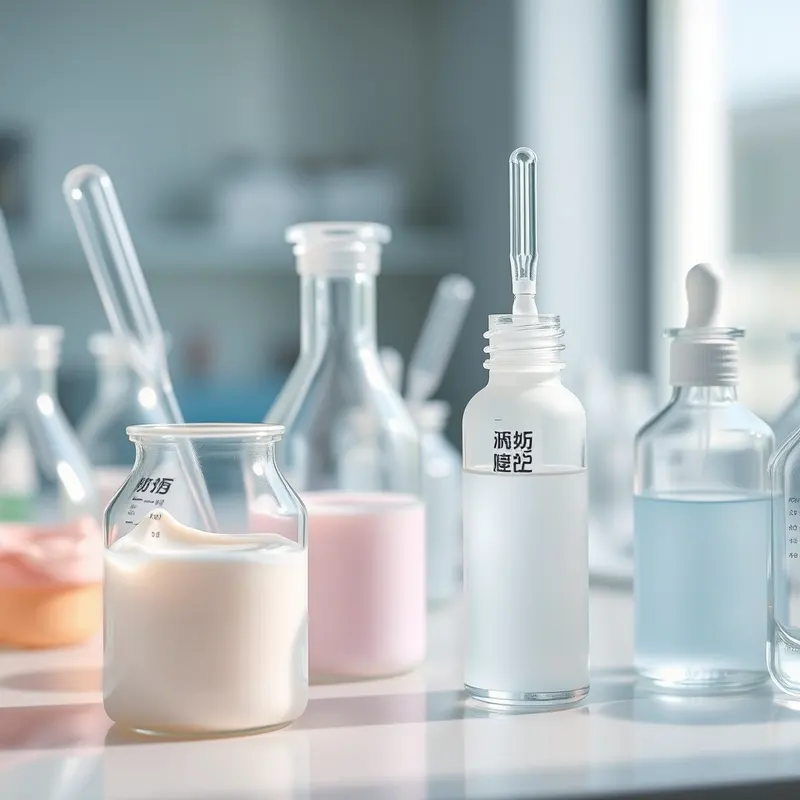
- **Testing in the final packaging.** Stability established in a laboratory glass jar tells you very little about behaviour in the tube or pump you will actually ship. Insist that the data refers to your pack.
- **Compatibility data** between the formula and the packaging materials, since heat accelerates any interaction between them.
If a factory cannot produce this documentation, that is itself the finding. A manufacturer experienced in export has it ready because buyers ask routinely. During **product development**, raise the shipping route at the brief stage so the formulator can design for it — adjusting an emulsifier system before production is straightforward, and reformulating after a damaged shipment is not.
Packaging Choices That Survive the Journey
Packaging does more for heat resistance than most buyers expect, and the decisions are cheap to make early.
**Closure and seal.** Induction seals under the cap, properly specified torque, and a liner suited to the formula. Ask what seal integrity testing was done and at what temperature.
**Headspace.** Too much air in the container means more expansion. Fill levels should be specified and verified rather than left to whatever the filling line defaults to.
**Material selection.** Different plastics soften at different temperatures and vary in how they interact with oils and fragrances under heat. Glass is dimensionally stable but heavy and breakable. Aluminium tubes behave differently from plastic laminate.
**Labels and adhesives.** Specify an adhesive rated for heat and humidity. Lifting labels are among the most common and most visible arrival defects, and they make good product look counterfeit.
**Cartons.** Corrugated board loses strength as it absorbs humidity, so a stack that is fine in a dry warehouse can crush in a humid container. Specify board grade with the climate in mind, and avoid over-stacking.
**Pallet configuration.** Shrink wrap traps heat. Edge protection, correct stack height and avoiding overhang all reduce crush damage.
When you **request quotes from Thai factories**, include these packaging specifications in the request. A quote built on the cheapest available components is not comparable to one built to a specification, and you will not discover the difference until the goods arrive.
Specifying the Shipment Itself
Once formula and packaging are settled, the logistics specification is the last layer of control.
1. **Choose the mode deliberately.** Sea freight is economical and slow, which means long exposure. Air freight shortens exposure but has its own temperature extremes and restrictions on certain products. Decide based on the product, not only on cost. 2. **Consider reefer or insulated options** for genuinely sensitive goods. Temperature-controlled containers cost more; for high-value or heat-labile products the arithmetic often works. 3. **Specify container positioning** where possible. Goods near the container walls and roof experience the highest temperatures; loading plans can keep sensitive items toward the centre. 4. **Use temperature loggers.** Inexpensive data loggers placed inside the shipment give you a record of what the goods actually experienced. Without that record, any claim becomes an argument. 5. **Minimise yard time.** Much of the worst heat exposure happens stationary, in sun, at origin or destination. Plan customs documentation so goods are not waiting on paperwork you could have prepared earlier. 6. **Avoid the hottest season** for a first shipment of a new product, so you learn with a lower-risk load. 7. **Confirm destination storage** before arrival. There is little point protecting goods for three weeks at sea and then putting them in an uninsulated warehouse.
Buyers running **global sourcing** across several origins should keep these specifications in a single standing document and apply it to every supplier, so protection does not depend on who happens to be handling the order.

Inspection and Acceptance on Arrival
What you do in the first days after arrival determines whether a problem is recoverable.
**Inspect immediately.** Most carriers and insurers impose short notification windows. A container opened a week late is a claim already weakened.
**Document before unpacking.** Photograph the seal, the container interior, the pallet configuration and the carton condition before anything is moved. Download the temperature logger data at the same time.
**Sample properly.** Use a defined sampling plan rather than opening whichever carton is nearest. Agree the plan and the acceptance criteria with your supplier before shipment so the results mean something to both parties.
**Check against defined criteria.** Appearance, colour, odour, viscosity, fill level, seal integrity, label adhesion, carton condition. Vague criteria produce vague disputes.
**Retain samples.** Keep retained units from each batch, stored properly. If a problem emerges weeks later, these are your reference point.
**Escalate promptly and in writing.** With the logger data, the photographs and the agreed criteria, a conversation about remedy is factual rather than adversarial.
Agree in the contract, before the first order, who bears the risk of heat damage and at which point title and risk transfer. This follows from your Incoterm, and buyers frequently discover only after a loss that risk passed to them at the origin port.
Building This Into Supplier Selection
Heat resilience should be a selection criterion, not something you discover after the first container.
Questions worth asking any candidate factory:
- **Which markets do you currently export to, and by which mode?** A factory shipping regularly to hot-climate destinations has already solved problems a domestic-focused factory has not met.
- **Can you show stability data in final packaging at elevated temperature?** Documents, not assurances.
- **What is your warehouse environment?** Goods already heat-stressed before loading start the journey with less margin.
- **How do you handle a heat-related claim?** Ask for an example of how a past issue was resolved.
- **Who selects the packaging components, and can I specify them?** A factory that insists on its own components limits your control over a key variable.
A **5FINE** style arrangement, where one partner coordinates formulation, packaging selection and export documentation through a single point of contact, reduces the number of places this can fall between parties — though the specifications and the verification remain yours to define either way. Whichever structure you use, write the heat requirements into the specification sheet and the contract. A requirement that exists only in an email thread is a requirement that will not be met consistently.
Need expert support?
Leave your details and our team will get back to you.
FAQ
Frequently asked questions
How hot does a shipping container actually get?
Interior temperatures in a sealed container under direct sun run substantially above ambient, and the goods sit at that level for extended periods rather than briefly. Rather than relying on general figures, place temperature loggers in your own shipments on your own routes. Your measured data is what you can act on and what supports a claim.
Is air freight safer than sea freight for heat-sensitive cosmetics?
Shorter exposure helps, but air freight has its own extremes, including cold at altitude and hot tarmac waits, plus restrictions on alcohol-based and pressurised products. It is a trade-off rather than a solution. The more reliable protection comes from a formula and packaging designed for temperature stress in the first place.
Should I use temperature-controlled containers for all cosmetic shipments?
Not usually, because the cost is significant and most well-formulated cosmetics do not require it. Reserve it for products your stability data shows to be genuinely heat-labile, or for high-value shipments where the cost of loss outweighs the freight premium. Let the testing data drive the decision rather than caution alone.
Who is liable if products arrive heat damaged?
That depends on your Incoterm, your contract and what the evidence shows. Risk often transfers earlier than buyers assume. Settle liability in the contract before the first order, agree acceptance criteria and a sampling plan in advance, and use temperature loggers so that the question can be answered with data rather than opinion.
Prepared by the Thai Cosmetic Factory team for informational purposes. Some links may lead to referred partners.
Articles
Related articles

What a Cosmetic Notification Number Means (And Why It Matters When Vetting a Factory)
If you've been sourcing from a skincare manufacturer in Thailand, you've probably seen a string of digits called a "notification number" attached to a product or formula. Buyers of

Payment Terms with Thai Factories: A Practical Guide for Brand Owners
Getting payment terms right with a Thai cosmetic factory is less about negotiating the lowest deposit and more about matching your payment structure to what's actually being verifi
AQL Inspection for Cosmetics: A Buyer's Guide to Sampling and Acceptance Levels
When a container of serums, creams, or supplement capsules arrives from Thailand, you can't open every single unit to check it. That's where AQL inspection for cosmetics comes in —