Factory types
Formulation Lab vs. Production Facility: What's the Difference in a Cosmetic Factory?
If you've been talking to Thai manufacturers, you've probably heard both terms used almost interchangeably — "our lab can develop that formula" and "our facility handles production
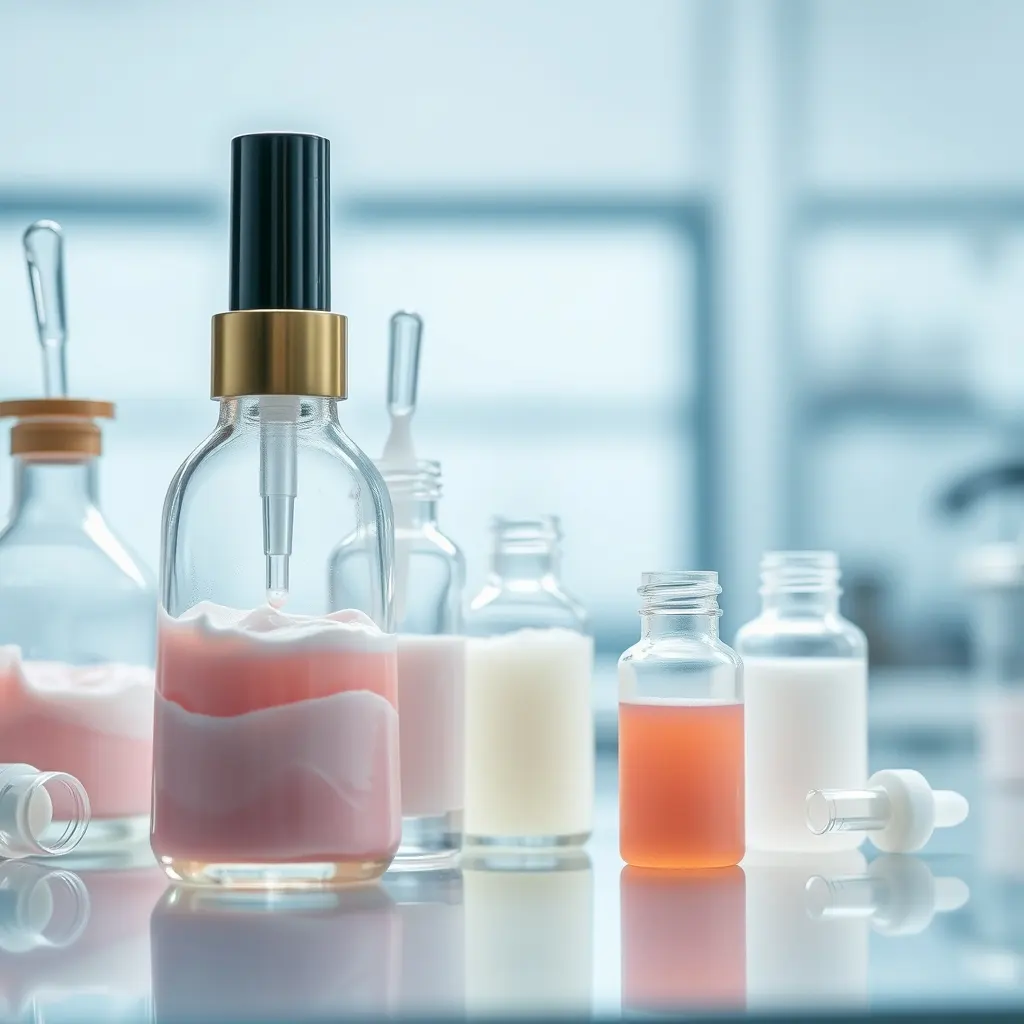
If you've been talking to Thai manufacturers, you've probably heard both terms used almost interchangeably — "our lab can develop that formula" and "our facility handles production" — sometimes from the same salesperson in the same call. But a formulation lab and a production facility are not the same thing, and confusing them is one of the more common mistakes brand owners make when evaluating a cosmetic factory. Knowing the difference helps you ask sharper questions, read a factory tour correctly, and avoid surprises when your small-batch sample suddenly needs to scale to thousands of units. This guide breaks down what each one actually does, how they connect, and what to check when you're assessing a potential manufacturing partner.
What a formulation lab actually does
A formulation lab is where R&D chemists develop, test, and refine a product's recipe — the actual mix of active ingredients, emulsifiers, preservatives, fragrance, and texture agents that make up a cream, serum, or shampoo. This is small-scale, iterative work: a chemist might run a dozen variations of a moisturizer before landing on the right viscosity, pH, and stability profile. Labs typically have analytical equipment for stability testing (heat, cold, light exposure), pH meters, viscometers, and small mixing vessels that produce bench-top batches of a few hundred grams to a few kilograms — nowhere near production volume. If you're developing a custom formula, this is the stage where you approve texture, scent, and performance before anything is scaled up.
What a production facility actually does
A production facility is where an approved formula gets manufactured at commercial scale — filled into bottles or jars, batch-coded, packed, and prepared for shipment. This involves industrial mixing tanks (often hundreds of liters), automated or semi-automated filling lines, capping and labeling equipment, and quality control checkpoints at each stage. Production is about consistency and repeatability: batch 1,000 and batch 1,001 of the same SKU need to be identical in color, texture, and fill weight. This is also where good manufacturing practice (GMP) controls, environmental monitoring, and in-process quality checks matter most, since any deviation here affects every unit in the run rather than a single bench sample.

Why some factories have both — and why some don't
Larger, vertically integrated manufacturers often operate an in-house formulation lab alongside their production lines, which lets a brand move from concept to finished goods under one roof with fewer handoffs. But plenty of legitimate factories specialize in only one side: some are strong production houses that manufacture from formulas you or a third-party chemist already supply, while others are boutique labs that develop formulas and then outsource production to a partner facility. Neither model is inherently better — it depends on whether you're starting from scratch with a new formula or you already have one and just need reliable manufacturing. The red flag isn't a factory having only one capability; it's a factory implying they have both when they don't, or being vague about where your product will actually be made.
Questions to ask to tell them apart
During supplier verification, ask directly: 'Is formulation development done on-site, and is production done in the same building or a separate facility?' Request to see both areas if a factory visit is possible, since a lab typically looks more like a chemistry room while production floors look like an assembly line. Ask who owns the formula IP if the lab develops it for you, and what happens if you later want to move production elsewhere — can you take the formula with you? Also ask how samples move from lab scale to production scale: a formula that works beautifully in a 500g bench batch can behave differently in a 500kg production tank, so ask what scale-up testing or pilot batches they run before committing to a full production run.
What this means for your quote and timeline
Understanding this split also helps you read a quote correctly. A quote for formulation work (developing a new scent or texture) is a different cost and timeline than a quote for production (manufacturing an already-approved formula at volume). If a factory bundles both into one number without breaking it down, ask for clarity — you want to know what you're paying for development versus what you're paying for manufacturing. For OEM/ODM work, most Thai cosmetic factories work around a standard MOQ of 1,000 units per SKU for production runs; formulation and sampling stages are usually negotiated separately and don't follow that same unit minimum, since you're paying for development time rather than finished goods. Pricing and exact scope should always be confirmed at the quote stage rather than assumed.
Need expert support?
Leave your details and our team will get back to you.
FAQ
Frequently asked questions
Can one factory handle both formulation and production?
Yes, some manufacturers operate both under one roof, which can simplify communication and reduce handoff risk. Others specialize in just one side and partner with separate labs or production facilities. Always confirm which setup you're dealing with rather than assuming.
Do I need a formulation lab if I already have a finished formula?
Not necessarily. If you already have a stable, tested formula, you may only need a production facility to manufacture it. A lab becomes essential when you're creating something new or need an existing formula adjusted for local ingredients, regulations, or cost.
Why does my sample behave differently once it's in full production?
This is a known scale-up challenge — mixing dynamics, heat distribution, and settling times differ between a small bench batch and an industrial tank. A good manufacturer runs pilot or intermediate batches to catch these differences before committing to a full production run.
Is MOQ the same for formulation work and production work?
No. Production runs commonly follow a standard MOQ of 1,000 units per SKU, but formulation and sample development are typically priced and scoped separately since they involve development time rather than finished units. Confirm this breakdown when requesting a quote.
Prepared by the Thai Cosmetic Factory team for informational purposes. Some links may lead to referred partners.
Articles
Related articles

Private Label vs Custom Formulation Skincare: A Buyer Checklist
The choice between private label and custom formulation skincare changes what you must verify at the factory. Different route, different evidence, different risks to check before you sign.
How to Choose Packaging Suppliers for a Cosmetic Brand in Thailand
Packaging is where many cosmetic launches slip: the formula is approved, but bottles leak, pumps clog or printed boxes arrive in the wrong shade. Knowing how to choose packaging su

Difference Between a Cosmetic Factory and a Lab: Buyer Guide
The difference between a cosmetic factory and a lab decides who can develop your formula, who can fill it at volume, and which documents you should be asking for.

Small Batch Cosmetic Factory Thailand: A Buyer's Verification Guide
Searching for a small batch cosmetic factory Thailand brings up plenty of claims and very little detail. The useful questions are mechanical: what vessel sizes run, how changeovers are handled, and who absorbs the cost of a short run.
Finding a Fragrance Manufacturer in Thailand: A Buyer's Verification Guide
Thailand has built a deep bench of cosmetic and personal care factories, and a good number of them run dedicated fragrance lines — perfumes, body mists, scented lotions, home fragr
What Is the Difference Between a Cosmetic Factory and a Contract Manufacturer?
If you have started sourcing in Thailand, you have probably seen the terms "cosmetic factory" and "contract manufacturer" used almost interchangeably in supplier decks and director